Get Over It

Monday, May 25, 2015


I’m tired of hearing writers complain that somebody else stole their story. Ninety-nine times out of one hundred, it simply isn’t true. These complaints tend to be based, at least in part, “upon that obsessive conviction, so frequent among authors and composers, that all similarities between their works and any others which appear later must inevitably be ascribed to plagiarism.”*

As I mentioned in my January 26, 2015  post, there is nothing new under the sun. Two people can independently have the same idea for a plot, and they are both likely to use the elements that flow naturally from it (called scènes à faire). Take the idea of putting Judas on trial for betraying Jesus. Wouldn’t you expect courtroom scenes with Caiaphas and Peter as witnesses? Of course you would.**

I don’t care how creative you are: you aren’t the only person who has had that idea and written a similar story. Nobody stole it from you any more than you stole it from them. So get over it.

Then turn that obsessive energy to good use and get back to writing.

__________

* The statement originated with the 2nd Circuit in Dellar v. Samuel Goldwyn, Inc., 150 F.2d 612, 613 (2d Cir. 1945) and was quoted by the 9th Circuit in Litchfield v. Spielberg, 736 F.2d 1352, 1358 (9th Cir. 1984).

** Porto v. Guirgis, 659 F.Supp.2d 597 (S.D.N.Y. 2009)

__________

The picture at the top of this post is a painting by Italian artist Gaetano Lodi, who was born in 1830 and died in 1886.

Thinking outside the Stage

Monday, May 18, 2015

 
I spent three hours on Saturday at a playwriting workshop. No, I’m not thinking about writing plays, but learning about one genre can provide insights into another. And venturing out of my comfort zone stretches my creative muscles for what I do write.
 
Besides, Saturday’s workshop was excellent. Hosted by the Indiana Writers’ Consortium, it featured playwright Evan Guilford-Blake and focused on adapting prose for the stage and adapting plays to prose form.
 
One thing I learned, or at least was reminded of, is that writers shouldn’t assume a story has to be told a certain way. After describing some initial principles, Evan had us do two exercises. In the first, we were given either the play or the prose version of a short piece he wrote and had already adapted. Then he asked us to rewrite it as the other type. I had the play version and turned it into a prose story, mostly by adding descriptions of the setting and changing the first character’s onstage monologue into thoughts. But some of the other participants were much more creative.
 
Before I continue, you need a little of the plot. The two-character play opens with a man nervously waiting for a woman he “met” through a dating service, but this is their first in-person meeting. When our working time was up, Evan started with those of us who turned the play into prose and asked which character’s point of view we had used. My first thought was, “his, of course, because she wasn’t in the scene at the beginning.” But one of the other participants did use the woman’s. He got around the POV problem by placing her in the scene from the beginning, but with a twist. She was hiding where she could check out the man before deciding whether she wanted to meet him. It was an inspired approach that had never entered my mind.
 
One of the people who turned the story into a play had backed up and added a new scene at the beginning. It still showed how nervous the man was but started at his apartment as he was getting ready for the date. This participant had also thought outside the box (or the stage) rather than just making the most obvious changes.
 
The main lesson I learned from Saturday’s workshop was to try something new. Experiment. If it doesn’t work, I don’t have to keep it. But if it does, it can take a good story and make it a great one.
 
And that should be every writer’s goal.
 
__________
 
The picture shows my high school senior play, many years ago. I am the spinster on the left.


Writing to the Sound of Silence

Monday, May 11, 2015


Some people like writing to music. When I was at an ACFW Indiana luncheon several weeks ago, one of the panelists mentioned that she plays 1940s music when writing World War II historicals and contemporary music when writing contemporary novels.

I prefer silence.

It isn’t that I don’t like music. Quite the contrary. Music distracts me because I want to listen or sing along when I should be writing.

Songs with words are the worst. Even when they are played as instrumentals, the words still run through my head. Sometimes they even bleed onto the paper by mistake.

But what about music without words? Some writers play classical music that matches the intensity of the scene they are working on: maybe the second movement of Beethoven’s Sixth Symphony for a peaceful scene or Stravinsky’s Rite of Spring for a chaotic one.

I enjoy classical music. But novels—and even chapters—don’t maintain the same intensity throughout. For example, Desert Jewels has a chapter where my protagonist and her friend are running an errand when a dust storm blows up. In the fury of the wind, the girls can’t see or hear each other and only manage to stay together because Emi has the good sense to grab Toyo’s hand and hold on. When they stumble upon a laundry barrack, they go inside to relative calm and stay there until the wind dies down enough for them to find their way home. The action rises again as they leave their shelter to brave the less ferocious but still gusty wind.

Of course, these intensity changes are also true of symphonies and concertos and violin solos. But I can just imagine how much of my precious writing time would be used up finding the perfect piece of music to match the changing rhythms of the chapter I’m working on at the time. I’ll leave that to the professionals when the book becomes a movie.

In the Simon and Garfunkel song, the sound of silence is a negative that translates into loneliness. When I’m writing, the sound of silence is a positive that translates into creativity.

Every writer is different. If you are more productive when writing to music, then do it.

But I prefer the sound of silence.

Of Summaries and Wonderland

Monday, May 4, 2015


Writing a book is easy compared to crafting a summary that attracts publishers and agents. How do you describe an 80,000-word novel in three pages or a 40,000-word story in one?

I just submitted an 80,000 word adult novel to an agent and had to boil the action down to three pages. Now I am working on a one-page summary for my 40,000-word middle-grade novel. This is the point in the submission process where I always feel like Alice in Wonderland facing an impossible task. Where do I start? How much do I include? Where do I end?

In spite of the delusional nature of Alice in Wonderland, it does occasionally surprise with a nugget of good advice. Near the end of Louis Carroll’s book, the Knave is on trial before the King and Queen of Hearts. When it comes time to read an important (or is it an unimportant?) piece of evidence, this exchange occurs:

The White Rabbit put on his spectacles. “Where shall I begin, please, your Majesty?” he asked.

“Begin at the beginning,” the King said gravely, “and go on till you come to the end; then stop.”

Good advice, yes, but it doesn’t go far enough. The beginning and the end of the summary are the easiest parts to write. The problem is the middle.


Earlier in Alice in Wonderland, Alice attends a mad tea party. The Dormouse tells a story, and Alice interrupts with so many questions that he never does finish. In writing a summary, my job is to provide just enough of the plot to intrigue agents and publishers without raising unanswered questions that frustrate them. The last thing I want is for them to react to my submissions the way Alice reacted to the Mad Hatter’s tea party:
 
“At any rate, I’ll never go there again! said Alice, as she picked her way through the wood. “It’s the stupidest tea-party I ever was at in all my life!”
 
Now I’m off to write a summary that begins at the beginning and goes on to the end.
 

__________

The pictures at the top are illustrations by John Tenniel for the original edition of Alice in Wonderland, first published in 1863. They are in the public domain because of their age.

Catching a Calm Day

Monday, April 27, 2015


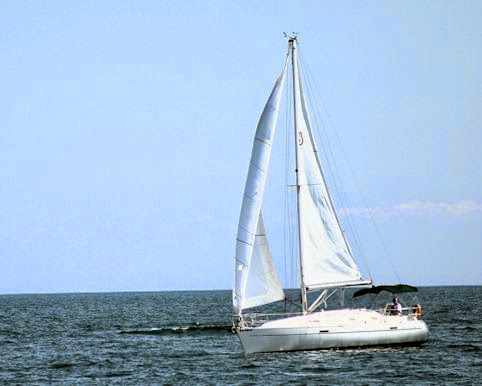
On Friday, we launched our sailboat for the season. Everything went perfectly—unlike last year, when we battled high winds and put a scratch in the fiberglass before we got Freizeit under control. This year could have gone the same way if we hadn’t been flexible.

The marina scheduled our launch for early Saturday morning, and neither Roland nor I was thrilled. But when Roland was preparing the boat, he got into a conversation with another owner who was scheduled for 11:00 a.m. on Friday. The other owner had to be out of town that day, so Roland switched with him.

That was fortunate for us. This year we launched in light winds and, as I said above, everything went perfectly. I hope the other boat had an easy launch, too, but that may not have been the case. The winds picked up on Saturday and the clouds cried with those unfortunate enough to put their boats in then. We were grateful that we had the flexibility to do it on Friday.

My writing life is like that, too. I need to be flexible enough to write in the calm periods, even when that’s not what I had originally planned. If I wait until I my scheduled times, I may discover that the light winds have turned into a gale. Maybe my brother is called into work and can’t take my mother to her dentist appointment—so I have to do it. Or my daughter pulls the television down on her head and I find myself rushing her to the doctor. (Okay, that was almost thirty years ago, but you get the point.)

So be ready to write whenever you can. It may be your best opportunity.

Lessons from Lunch

Monday, April 20, 2015


No, I’m not going to tell you that the Cobb salad I had on Saturday taught me that multiple ingredients make a story more interesting. That isn’t what I mean by lessons from lunch.

 
I drove 300 miles (round trip) on Saturday to hear a panel of respected authors speak at an ACFW Indiana luncheon. Some of the lessons I learned came from the panel (composed of Dawn Crandall, Denise Hunter, Rachael Phillips, and Cara Putman), but some came from the conversation beforehand. There were three quotes that I found particularly noteworthy. I am using the word “quotes” loosely, however. I haven’t taken shorthand since high school and may not have the words down exactly right, but they are substantially correct.

 
  • Writing something you aren’t interested in is like marrying the wrong person. While we were eating lunch, the people at my table were talking about the tension between writing as a business and writing what is on our hearts. Someone (possibly me) made the statement that if you aren’t excited about what you write, the product shows it. Then Darren Kehrer made the statement used here. He also said you end up hating the person you marry or the manuscript you have written.

         Some writers are so concerned about making money that they accept any assignments that come their way. The best writers are able to take what looks like an uninspiring assignment and find an approach that excites them. But I have also read articles and books that sound as if even the author was bored. I have taken several assignments over my writing career, and I’ve always managed to find the angle that gets me excited. But it is better to turn a project down than to put the reader to sleep.

 
  • Reading is the most important preparation for writing. Cara Putman made this statement during the panel, and she is in good company. In On Writing, Stephen King said, “If you want to be a writer, you must do two things above all others: read a lot and write a lot.”

         Cara wasn’t just talking about reading for pleasure, however. We need to read a book that way first to get the full enjoyment from it. But Cara was saying that we also need to analyze the books we read to understand what makes them captivate us. As she got ready to write her first legal thriller, she took books by three authors she thinks are good at it and wrote a chapter-by-chapter summary for each. That showed her the plot pattern that can make a good thriller.

 
  • God is faithful, but He is not predictable. Rachael Phillips said this during the panel. Her point was that we may think we know where we are going or where God wants us to go with our writing, and all of a sudden He sends us down a different path. I’ve certainly found that to be true in my life.

         I tried writing fiction in my high school days, but by the time I was ready to write as a serious pursuit, I was convinced that non-fiction magazine articles were my forte. I would never write a book. God didn’t agree, and there I was writing a book proposal and signing a contract for my first non-fiction book, In God We Trust. Okay, so maybe I could handle non-fiction books. But I would never write fiction. Then I got an idea for an adult (as in grown-up, not X-rated) novel, and I wrote it. Then I wrote another, and I have just finished a third. None of those novels have been published yet, but they show the folly of saying “never.” My most recently completed project is a middle-grade historical novel. Each new genre has been harder than the previous one. God certainly knows how to challenge me. He must also laugh at my bold statements about what I can or will “never” do.

 
         I love reading mysteries, but I could never write one. Does anybody want to take bets?

 
The Cobb salad was good, but the lessons from lunch were even better.

__________

 
The image at the head of this post shows Jo March reading. Jo March was Louisa May Alcott’s fictionalized version of herself, and she loved to read books as much as she loved to write them.

 
The picture was drawn by Frank T. Merrill and was included in the original edition of Little Women by Louisa May Alcott. First published in 1868, the illustration is in the public domain because of its age.


Should You HIre an Editor?

Monday, April 13, 2015


I just sent Desert Jewels to my copyeditor. When I tell people that, they often ask how copyediting differs from other types of editing. So this is a good time to repurpose a blog post I wrote for the Indiana Writers’ Consortium on November 13, 2013.

The IWC post was directed at self-publishing, but the information also applies when preparing a manuscript for submission to traditional publishers. I have modified the text from the original post to give it a broader application.

* * *

If you want to publish a book, you should hire a freelance editor. Yes, it can be expensive, ranging anywhere from $500 to $10,000 for a 60,000 word manuscript.* The actual price is based on a number of factors, including the type of edit and the experience of the editor. And the worse the shape of the manuscript, the more it will cost to edit. But if your goal is to produce a professional-quality book you won’t be ashamed of five years from now, it’s well worth the money.

What types of services do editors provide? For our purposes, we will concentrate on three.

Proofreading is the cheapest and most basic service that editors provide. A proofreader looks for typos, misspellings, and grammar errors. If your book has been typeset or reformatted, a proofreader can also check the final copy against your original manuscript to make sure they match. The cost to proofread a 60,000 word manuscript may average from $500 to $950.

Copyediting is probably the most common. I always pay for a copyedit before finalizing a book manuscript, even when I am submitting to a traditional publisher. After all, why wouldn’t I want to submit my best work?

Like proofreading, copyediting looks for typos, misspellings, and grammar errors. But it also looks for inconsistencies and for words and sentences and paragraphs that are confusing or awkward. One book on my shelf is easy to read and gives me interesting information, but it mentions that a woman was 12 in 1817 and 76 in 1871. So I can’t trust the facts without double-checking them with another source.

That arithmetic error is evident on the face of the manuscript, and a good copyeditor would have caught it. If you ask, a copyeditor will also check other sources to verify facts and references. Obviously, however, the more you ask a copyeditor to do, the more it will cost. For that 60,000 word manuscript, a copyedit may average anywhere from $750 to $2,500. 

Substantive editing—sometimes called line editing—is the most expensive, but it is also the most comprehensive. Although it includes some of the elements of a good copyedit, a substantive edit also looks at the contents and tells you what works and what doesn't. The editor may go so far as to recommend that you reorder your chapters to make the plot more suspenseful or eliminate your favorite passage because it’s irrelevant. For a 60,000 word manuscript, a substantive edit will average between $2,000 and $10,000.

What type of edit you need depends on your human resources. Do you belong to a writers’ critique group that includes knowledgeable members and provides honest feedback on both craft and clarity? Do you have someone (preferably not a family member or good friend) from your target audience who will give you candid comments from a reader’s perspective? And do you take full advantage of these resources? If so, you may not need a substantive edit.

I’m a grammar geek and, given time to do a careful read, am also good at catching typos and confusing words and phrases. Even so, it’s hard for me to edit my own work. I know what I wanted to say, and my mind reads it that way. And I’m not alone. Very few people can edit their own work and end up with an acceptable product. That’s why I use a copyeditor.

Of course, not everyone has the financial resources to hire an editor. Still, you may be able to figure something out. What about giving up that cappuccino you always buy on the way to work? Or do you have skills you can barter?

Start by asking yourself why you are writing and publishing. Your goals may be different if you write for your grandchildren than if you write for public consumption. But if you want to produce your best work, you will find a way to polish it before sending it out into the world.

__________

* The cost figures are from 2013.