


Mixing Pleasure with Business

Monday, March 28, 2022


Roland and I just returned from a trip to Panama. It was intended only as a vacation, but I am giving some consideration to writing a story about crossing the Isthmus of Panama before the canal was built. If I do, I can use some of my photos as examples of what people might have seen along the way.

One route to California during the gold rush of the mid 1800s was via the Isthmus of Panama. Gold seekers would board a ship at New York City or Boston or Philadelphia or New Orleans and take it to a small port on the eastern cost of Panama. From there, they would cross the forty miles between the Atlantic and Pacific oceans by foot, mule, and canoe. When they reached Panama City, they picked up a ship to San Francisco, completing their trip.

The photo at the top of this post shows part of a mangrove forest. This particular one was in Belize, but travelers would have seen a similar sight as they approached Panama from the east.

Then there is the wildlife. The following photos were taken in Costa Rica but their subjects would likely have been seen in Panama as well. They show, in order, a bare-throated tiger heron, a caiman (relative to alligators and crocodiles), an emerald basilisk, and a howler monkey. The caiman and the emerald basilisk blend in with their surroundings, so it may take a minute to see them.


The Panama trek would also have shared vegetation with other parts of Central America. These photos were taken in Roatan, Honduras. The first shows a chocolate tree, with the chocolate coming from the seeds inside the green pods, and the second is heliconia, prevalent throughout the tropics.


Once the travelers reached Panama City, they would have seen the streets of what is now the old town, as shown in the final photo.


So although my trip was purely for pleasure, I may have gotten some business out of it as well.

Be Your Own Photographer

Monday, March 21, 2022


I’m currently working on a story that takes place in the Pullman neighborhood of Chicago during the 1894 Pullman strike. I found a number of images online, but since I live in the Chicago area, I decided to take a field trip and check it out for myself.

The Pullman factory is no longer there, although some of the buildings remain. More importantly, though, the residential parts are much as they were then. I can look at old photographs, and I did, but they didn’t give me the sense of place I received from walking the same streets my protagonists did and taking in some of the same sights they saw every day. Unfortunately, the feeling will eventually fade, so I try to keep it alive as long as possible through my own photographs.

Here are some I took while walking around the neighborhood. The one at the beginning of this post shows the wide, tree-lined streets, which were a drawing point back then as they are now. The next one shows the type of skilled workers duplex that my protagonists live in. The rest show, in order, the Greenstone Church my protagonists attend, part of the old Pullman factory, and the Pullman Hotel.


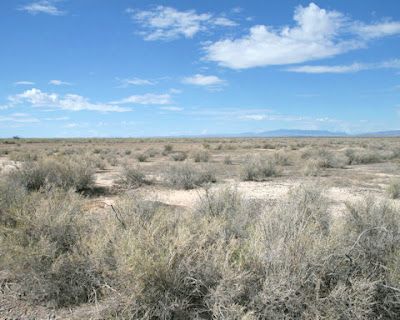
Fortunately, Pullman is a historic neighborhood and much of it has been preserved and/or restored. The same isn’t true of the Topaz War Relocation Center.

Topaz was dismantled and the buildings sold off after the war, and the last two photos show what it looked like when I visited on a research trip in 2014. Even though the camp itself was gone, being there reinforced the photos taken during the war and emphasized the sense of isolation and desolation the 8,000 inhabitants must have felt.


So if you have the opportunity to go on location to research your story, be sure to take a camera along.


Photos Tell the Story

Monday, March 14, 2022


Last week I wrote about using memoirs and other personal accounts to research a historical novel. This week I’ll cover the benefits of using old photos to supplement those resources.

Again I’m going to draw my examples mainly from the research I did for Desert Jewels because the War Relocation Authority hired professional photographers to take thousands of photographs during the removal and internment of the Japanese Americans living on the West Coast. The photos were presumably intended to show the country that the Japanese Americans were being treated humanely, but some, especially by Dorothea Lange, ended up being censored because they showed a different story. Fortunately, they have since been released and are available for historical research.

In most instances, the Japanese Americans were originally sent to assembly centers, which were intended as temporary homes until more permanent camps were built. The photo at the top of the page shows four children, presumably siblings, after arriving at the Turlock Assembly Center. Notice the tags they had to wear for identification but which also made them feel like a number rather than a name.

Then there is this photograph, showing the horse stables that were turned into makeshift “apartments” at Tanforan Assembly Center and were occupied for months before the families living in them were transferred to the Central Utah War Relocation Center, commonly known as Topaz. As you can see from the photo, living conditions at Tanforan were not humane.


The third photo is a panoramic view of Topaz. Several families were crowded into each of those barracks. Worse, the desert was a desolate setting for the Japanese Americans, most of who were used to the lush vegetation of western California.


Or to use a research example from another book, here is how downtown Chicago looked a day or two after the Great Chicago Fire had burned itself out. (The photo shows the corner of State and Madison.)


Memoirs and other personal experience accounts are the most important research sources, but photos can supplement that research by providing a more a vivid picture (literally and figuratively) of what life would have been like.

And that makes them another valuable research tool.

__________

Dorothea Lange took the first two photographs and Francis Stewart took the third. All three are in the public domain because they were taken by War Relocation Authority photographers as part of the photographers’ official duties as employees of the United States government.

The last photo is in the public domain because of its age.


They Were There

Monday, March 7, 2022


I enjoy reading historical fiction, but only if it is an accurate portrayal of the times and events. So when I write my own historical novels, I am careful to get the details right. Unfortunately, I wasn’t there to experience the events. Researching the facts helps some, but I want to know what people went through and how they felt about it.

That’s why I love personal accounts. Memoirs. Diaries and journals. Newspaper interviews. Letters.

My first middle-grade historical, Desert Jewels, is about a Japanese American girl living in California when Japan bombed Pearl Harbor, and it follows her through a temporary assembly center at Tanforan to a more permanent camp at Topaz, Utah. I picked that particular path because there was a wealth of personal experience information, including four memoirs—with Desert Exile: The Uprooting of a Japanese American Family by Yoshiko Uchida providing particularly valuable information. My research also made use of newspaper archives from Tanforan and Topaz, where the articles were written by residents and columns showed their sense of humor and unique take on their experiences.

Diaries were an important resource for my as yet unpublished book about the Civil War siege of Vicksburg, Mississippi. Diaries were fashionable in the mid-1800s, and I had plenty to draw from, especially the diary of Mary Ann Webster Loughborough (published as My Cave Life in Vicksburg). I am currently working on another book that takes place a few years earlier and tells the story of a girl sailing around Cape Horn on her way to the California gold fields, and the journals kept by men following that path are extremely helpful.

Those are all events that cover months and, in the case of the Japanese American internment, years. But what about disasters that cover periods too short to generate memoirs or diaries? Historical society collections can be helpful there. When I was writing about the Great Chicago Fire, I studied the many memories collected by the Chicago Historical Society to understand what my characters would have done and what path they might have taken to flee the fire.

But it isn’t just fiction that can benefit from personal accounts. I just finished reading Liar Temptress Soldier Spy: Four Women Undercover in the Civil War by Karen Abbott. Those women’s notes and memoirs gave the book a story-like quality that a purely factual account would have missed.

Letters can be helpful, too. When I wrote my first non-fiction book, In God We Trust: How the Supreme Court’s First Amendment Decisions Affect Organized Religion, I included several chapters on what the founding fathers meant by the First Amendment. But I didn’t want to rely on other people’s opinions. Thomas Jefferson was in France when James Madison drafted the Bill of Rights, and the two men corresponded as often as the slow mail service would allow. Those letters gave me a better insight into their thoughts than I could have found elsewhere.

The point is simple. If you want to add authenticity to your writing, read what it was like for those who experienced it.

Then give your own characters those same thoughts and feelings.


Bringing History to Life

Monday, February 28, 2022


This week I am reprinting a post I published on the Indiana Writers’ Consortium blog on February 5, 2014. I am using it as a lead-in to several blog posts about historical research.

Bringing History to Life

Have you ever been told to “write what you know”? Some writers think that means they should only write what they have directly experienced. But if everyone felt that way, we would have no historical fiction and no biographies of long-dead individuals.

So what does the phrase really mean? I think it has two components.

The first component is research. Assume I want to write a story about the RMS Titanic disaster in 1912. I wasn’t there, so how can I make it realistic?

I can start by getting into the heads of those who were there.

Autobiographies, letters, newspapers, and “as told to” accounts are better than history books for learning what people actually experienced. And for more recent events, interviews can provide additional information by showing the anguish in people's voices and the pauses to compose themselves before talking about losing their fathers or brothers 

The Titanic survivors are all dead by now, so I can’t talk to them. But several wrote books or articles about the experience, and many more were interviewed by newspapers in the days following the disaster. There are even some tapes where you can hear the emotion in the survivors’ voices. These are all resources that a writer can tap into to understand what the participants experienced 

The second component of writing what you know is as simple—or as gut-wrenching—as breaking the experience down and reaching into your own background for related incidents and emotions. How can you portray the feelings of a character waiting to board a life boat or sitting on the ocean and watching the ship go down? He or she would probably have terrified. But you’ve been afraid, too. Remember the feeling and magnify it. Have you watched a loved one die? Use that. We all experience the same things in different degrees, so take your own reactions and modify them to fit the situation.

I believe in writing what I know. But that doesn’t mean I have to have been there.

__________

The photo at the top of this page was taken by Francis Godolphin Osbourne Stuart as the RMS Titanic left Southampton, England on April 10, 1912. The image is in the public domain because of its age.


Story Comes First

Monday, February 21, 2022


I have been writing a historical novel about living in the Pullman neighborhood during the Pullman strike, and I recently sent it to my middle-grade beta readers. This is the first novel I wrote with a male audience in mind, so it was the first time I used boys as beta readers. The boys who enjoy historical fiction liked it, but the ones who don’t found that it dragged too much. One boy said, “the first chapter didn’t have enough action and I lost interest quickly,” and two mentioned that the last chapters were boring.

It wasn’t hard for me to identify the problem. One reason I write middle-grade historicals is because I believe it’s important for today’s children to know about their history. But my readers want a story, not a lecture. So when I wrote the next draft incorporating my beta readers’ suggestions, I kept that in mind.

First, I added more action to Chapter 1 and eliminated some of the information I had wanted to convey about living in the Pullman neighborhood. That information slowed the story down and was there because of my desire to teach, not because it was important to the story. So it had to go.

I also added several fights. The story still doesn’t show the full violence of the strike since that took place outside the Pullman neighborhood, but the fighting does add to the story while making it more interesting.

Then there were those last two chapters that even I found boring. I had used them to sum up the lessons I wanted my readers to learn. Unfortunately, they dragged the story down rather than adding to it. Fortunately, the previous two chapters had already done a good job bringing closure to the story. So after incorporating a small amount of material from the last two chapters into earlier ones, I simply deleted them.

The story is much stronger now thanks to beta readers who followed instructions and gave me their honest opinions.

Because of their comments, I swallowed my desire to lecture and put story first.


How Many Drafts Make One?

Monday, February 14, 2022


Last week I mentioned that I like to rest my stories between drafts, but that leads to another question: How many drafts do my manuscripts go through? I usually say “three,” but, as with the time it takes to write a book, the answer isn’t that simple.

Basically, I do three master drafts and numerous lesser ones that I don’t know how to count.

Some writers claim to write the first draft from beginning to end without ever changing a word or even a period, but I’m not sure I believe them. In any event, I can’t do that. I am constantly rewriting as I write, often changing the sentence I just completed. Then I send the story off in pieces to my critique partners and incorporate their comments before starting on the next version. So if you want to be technical, that means that what I call the first draft is actually the second or third or fourth or fifth . . .

When I do what I call my second draft, I make the original changes on a paper copy and often refine them while transferring them to the computer. Then, depending on the significance of the changes, I may or may not send that draft off to my critique partners.

That is followed by a quick review to prepare the manuscript for my beta readers. I call that a “polish draft” but don’t put a number on it.

After I get the comments back from my beta readers, I do what I consider to be my third and final draft. Again, I make additional changes as I go along and I may or may not send it to my critique partners.

One more final polish, and off the manuscript goes to my copy editor. Then I make the changes I agree with before submitting it to agents or publishers.

So how many drafts do you count?